

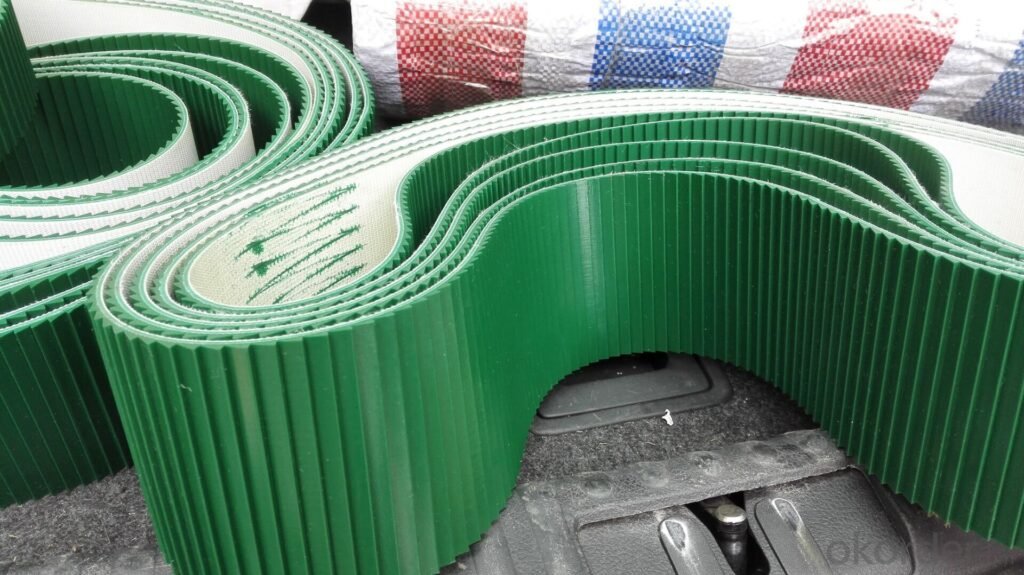
The conveyor belt design is one of the key factors in any industrial application. There are extreme pressures on cost-effective and reliable products that meet safety and environmental specifications, while still maintaining the maximum possible production volume.
Table of Contents
Types of Pvc Conveyor Belts
There are many types of PVC conveyor belts for businesses of all sizes. The choices start with what the belt is used for. Pvc conveyor belts are specifically used for moving material along a fixed path, either horizontally or vertically. These belts can be set to move at different speeds depending on the need.
In general, there are two main types of PVC conveyor belts: open deck and closed deck.
Open deck belts use large panels mounted on top of each other like a book cover so each item moving along the belt has plenty of space to move. Closed deck belts are more common and function much like a moving sidewalk with individual panels that touch each item moving along the belt. The advantage of closed deck belts is that they are more efficient and can move more material per hour than open deck belts. They also tend to be easier to clean and maintain.
When choosing a belt it’s important to select the right size for your application. Belts come in different widths and depending on the type of belt, either single or multi-use, there are corresponding widths. Multi-use belts come in two main types: standard and heavy-duty. If your belt will be used for moving both light and heavy items, it may be best to go with a standard multi-use belt. If you only need to move lighter items, then a heavy-duty multi-use belt may be a better option. When selecting a belt it’s also important to decide what type of bearings it will have. Standard conveyor belts typically use ball bearings while heavy-duty belts use roller bearings. Ball bearings are less expensive but can wear down more quickly while roller bearings are more expensive but last longer.
Important Features to Consider

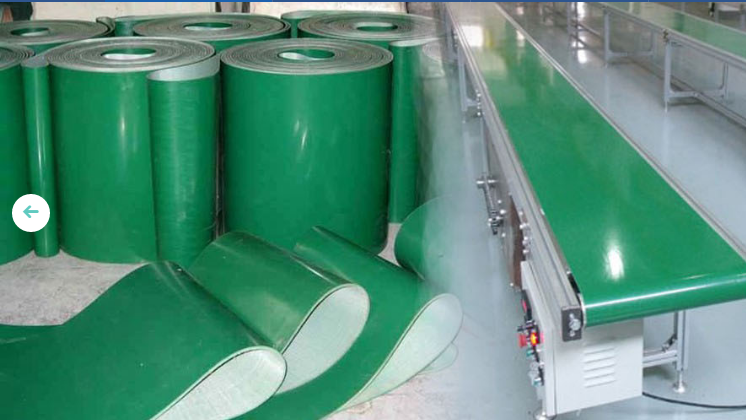
When choosing a PVC conveyor belt for your business, there are a few important features to consider.
First, the width of the belt should be appropriate for the quantity of material being transported. Too narrow of a belt can result in overloading and wear and tear on the machinery, while too wide of a belt will require more frequent replacement.
Next, the speed at which the belt moves materials should be appropriate for your business needs. A slow-moving belt may cause plants or machines to \”bounce\”, while a fast-moving belt may cause overheating or “striping” of material.
Third, consider the weight capacity of the belt. Will the belts be used to transport heavyweights? Lighter materials? Both? Be sure to calculate how much weight the belts can handle before making a purchase.
And finally, make sure that you have an understanding of your warranty options when it comes to PVC conveyor belts. Many manufacturers offer warranties that cover parts and/or labor for certain time periods, so it’s important to know what is included in those warranties before making a purchase decision.
Types of equipment Required for Installation
A conveyor belt is an essential piece of equipment for any business. The right conveyor belt can save you time and money, while the wrong conveyor belt can lead to frustrating and costly mistakes. So what do you need to know before buying a conveyor belt?
First, consider your business’s needs. A small business may not need as many bells and whistles as a larger company does, but they still need a conveyor belt that can handle the workload. Where will the belt be used? Is it dirty or hazardous? Will it be regularly moved or are rest stops required?
Second, look at the type of material being transported. If the belt will be transporting food, it’s important to choose one that’s made from safe materials such as rubber or plastic instead of metal. Some metal belts are also microwave-safe which is handy if you’re dealing with wet foods.
Third, consider how often the belt will be moving and how much weight it will be carrying. A low-speed conveyor belt can handle lighter loads while a high-speed belt is better for heavier objects. Also, consider the width and length of the belt; most businesses wouldn’t want a longer than necessary belt because it would result in more downtime during transport.
Now that you’ve got all of your specifics identified, go ahead and start shopping! There are plenty of affordable options available in online stores, so don’t hesitate to explore them all before making a decision.
Durability and Cost
When it comes to choosing a PVC conveyor belt for your business, durability, and cost are both key factors to consider. Here are some tips on how to choose the best belt for your needs:
1. Look at the lifespan of the belt. A long-lasting belt will be more expensive, but it will also last longer and be less likely to break.
2. Consider the type of material used in the belt. A durable PVC conveyor belt made with an appropriate material will be stronger and last longer than a cheaper, less durable belt made with a different type of material.
3. Consider the weight capacity of the belt. A heavier load will require a thicker belt to support it, so make sure that the weight capacity of the chosen belt is sufficient for your business needs.
Maintenance
A conveyor belt is an essential part of any manufacturing or distribution business. It transports raw materials or finished products from one location to another. Typically, the conveyor belt moves material slowly and steadily along its length, allowing workers to move large amounts at once.
There are many factors to consider when selecting a conveyor belt. The type of material being transported, the width and depth of the belt, and the speed of movement are all important factors.
The key considerations for a conveyor belt are weight and speed. A heavier belt moves more material in less time than a thinner belt. Circuit boards with larger components can also handle a thicker belt than smaller parts can. Likewise, slower speeds minimize wasted time and increase efficiency.
When choosing a conveyor belt, it’s important to consider your specific needs. Check with your manufacturer or supplier to see what belts are available and make sure they meet your specifications. You can also measure your current belt to get an idea of what size you need.