

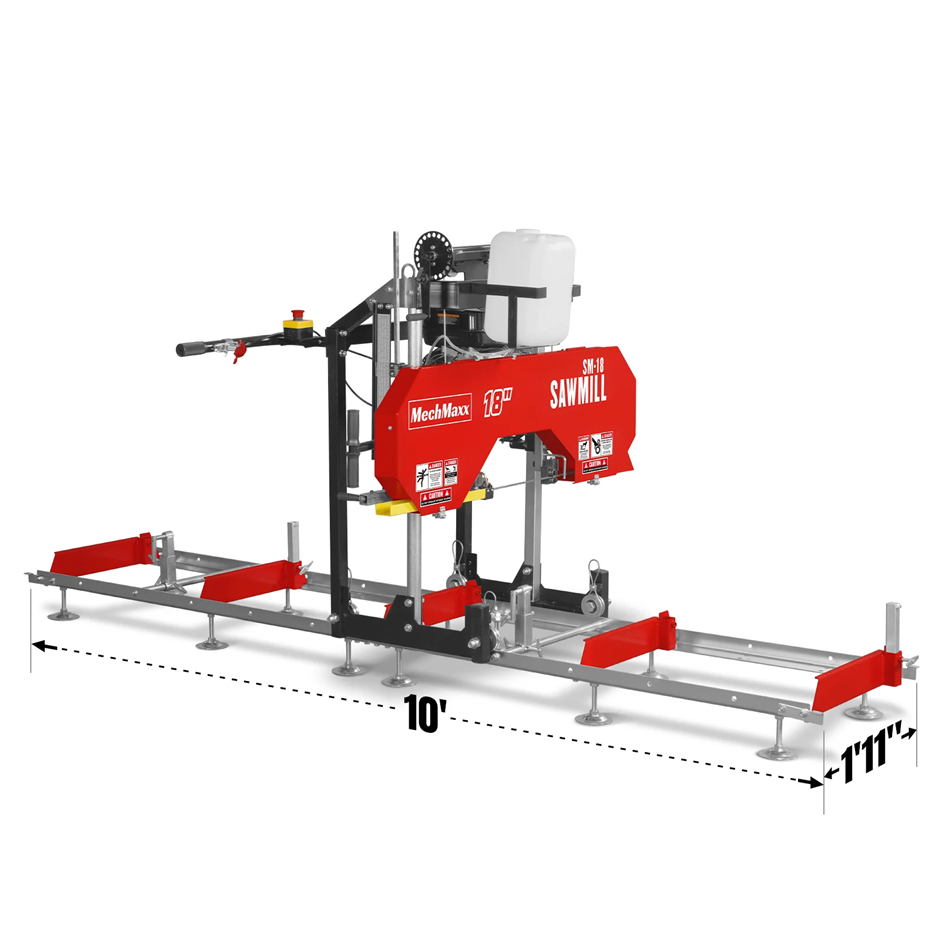
Buying a portable sawmill sounds simple until you realize one thing. Not every sawmill fits every log. If the mill is too small, your logs will not fit. If it is too slow, the work becomes tiring fast.
This guide helps you choose the right portable model from the many sawmills for sale. We will cover what to check before you buy, what features matter most, and how to avoid costly mistakes.
By the end, you will know how to match the sawmill to your log size, your work style, and your budget, so you can start cutting straight lumber with less stress.
Table of Contents
What a portable sawmill is?
A portable sawmill is a machine that turns logs into usable wood. It cuts logs into boards, beams, or slabs, so you can use the wood for building, furniture, or farm work. The big benefit is that you can mill your own timber instead of paying high lumber prices.
A portable sawmill is not the same as a full production mill. It can still do serious work, but it is made for small to medium output. So, it fits landowners, farms, woodworkers, and small crews who want control over their own lumber.
Also, “portable” means you can set it up on your land or move it to another location. That is helpful when the logs are heavy and you do not want to haul them far.
Portable sawmill types (and what each is best for)
There are a few main portable sawmill types. The best one depends on how often you mill and how heavy your logs are.
Manual portable sawmills
A manual sawmill is the simplest type. You handle most tasks by hand, like loading, turning, and clamping the log. It is a good choice when you mill on weekends, have a tighter budget, or want to learn at a slower pace.
However, manual work can get tiring when logs are large. So, if you plan to mill often, you may want more help from the machine.
Hydraulic or semi-hydraulic portable sawmills
These sawmills help with log handling using hydraulic or powered parts. They make it easier to lift, clamp, and turn heavier logs. Because of that, they save time and reduce physical strain.
This type is a good fit if you mill regularly, handle big logs, or want faster output with less effort.
Trailer-mounted vs stationary setup
A trailer-mounted sawmill is built to move from place to place. It helps if you want to mill on different properties or offer mobile milling.
A stationary setup stays in one work area. It can be more stable and convenient if you always mill in the same spot and you already have a good place to store logs and lumber.
The 9 checks to make before you buy
1) Max log diameter and max cut width
This is the first thing to check. If your common logs are bigger than the mill can handle, you will waste time trimming logs or you will not be able to cut them at all. So, match the sawmill to the log sizes you actually have, not the rare “one big log” you might cut once.
2) Max log length and bed extensions
Some mills handle short logs well, but long beams need more bed length. If you plan to cut long boards, check the maximum log length. Also check if the mill supports bed extensions, because extensions can be cheaper than buying a larger mill.
3) Engine power and cutting pace
Engine power affects how smoothly the blade cuts through wood. A lower-power engine can still work, but you may need to cut slower, especially in hard wood or large logs. If you want faster output, more power helps.
4) Blade type and blade length
Every sawmill uses a specific blade size. So, you must choose blades that match your mill model. Also, different tooth styles suit different wood types. Picking the right blade improves cut quality and reduces slow cutting.
5) Blade availability and cost (very important)
You will buy blades again and again. So, blade supply matters a lot. If blades are hard to find, your work can stop. If blades are expensive, your cost per board goes up. Because of that, always check how easy it is to buy blades for the mill you want.
6) Accuracy and adjustability
A sawmill should hold settings well. If the head or guides move during cutting, boards can come out uneven. So, look for a mill that locks solid and adjusts in a clear way. This helps you get straighter lumber with less rework.
7) Portability and setup time
Some mills are easy to move and set up. Others take more effort. Think about how often you will move the sawmill. If you mill in one place, setup time matters less. If you travel job to job, easier setup saves time.
8) Handling logs safely
Logs are heavy and can roll fast. So, check what support the mill offers for log control. Good log stops, clamps, and loading help make work safer and also help cuts stay straight.
9) Your wood goals
Be honest about what you want to make. If you want rough lumber for building, you can work faster and accept a more basic finish. If you want smoother boards for woodworking, you will care more about accuracy, blade choice, and steady cutting.
How to choose sawmill blades (quick guide)
Blades decide a lot: speed, cut quality, and how hard the sawmill feels to run.
Start by choosing blades that match your sawmill model and blade size. Then pick tooth style based on wood type.
For softer wood, a blade that clears sawdust well can cut faster. For hard wood, a blade that stays stable under load helps reduce wavy cuts.
Also, keep an eye on blade condition. If you see rough cuts, slow cutting, or the blade starts wandering, it may be dull. A sharp blade cuts straighter, runs cooler, and saves time. So, blades are not a place to “wait until it gets really bad.” Replace or sharpen earlier, and your work will feel easier.
Best portable sawmill pick by user type
The best sawmill depends on how often you mill, how big your logs are, and how much help you have. So, choose a model that matches your normal use, not the rare case.
Weekend landowner
If you mill only on weekends, a simple portable sawmill can be enough. You can take your time, learn the process, and cut lumber for personal projects like sheds, fencing, and small builds. In this case, ease of use and basic accuracy matter more than speed.
The main thing is choosing a mill that fits your typical log diameter and length. If the mill is too small, you will keep fighting your own logs.
Regular milling for a farm or small shop
If you mill often, you will want faster workflow and less physical strain. In that case, a semi-hydraulic or hydraulic-style setup can be a better fit. It helps with clamping, turning, and holding logs steady, so you work longer without feeling destroyed at the end of the day.
Here, power and stability matter more, because you will cut more wood and you will notice slow cutting quickly.
Small business or frequent mobile jobs
If you plan to sell lumber or travel for mobile milling, portability and setup time become very important. A trailer-ready sawmill helps you move job to job and set up without wasting hours.
For this use, you also want strong log handling tools. Mobile jobs often mean big logs, odd logs, and uneven ground. So, the sawmill needs solid control and quick adjustment.
| User type | What matters most | What to avoid |
| Weekend landowner | Fit for common logs, simple use | Too small capacity |
| Farm or small shop | Faster log handling, stable cuts | Weak power for your wood |
| Mobile / business | Quick setup, portability, strong control | Hard-to-find blades |
Mistakes buyers make (and how to avoid them)
One big mistake is buying a mill that is too small for the logs you cut most. People sometimes buy for price first. Then they realize they must trim logs or skip good trees. So, match the mill to your common log size first.
Another mistake is ignoring blade cost and blade supply. Blades are a repeat cost. If blades are expensive or hard to find, the sawmill can sit unused. So, check blade availability early.
Many buyers also forget the hardest part: moving logs. A portable sawmill cuts wood, but it does not magically lift a heavy log. So, plan how you will load, roll, and turn logs safely before you buy the mill.
Some people expect perfect boards on day one. Milling takes practice. So, start slow, learn how to square a log, and keep your blade sharp. Your cuts will improve fast when you focus on basics.
Finally, cutting with dull blades wastes time and can cause wavy boards. If cutting feels slow or rough, change or sharpen the blade sooner. That one habit saves both wood and effort.
Simple workflow for straight lumber
Straight lumber starts before the first cut. If the log is set wrong, the boards will come out wrong too. So, take a few minutes to prep.
Start by choosing a log that is not twisted and has no big loose bark. Then place it on the mill bed and lock it down. Make sure it cannot roll. If it can roll, it will. That is not a joke.
Next, do your first cut to create a flat face. This gives you a clean reference surface. After that, rotate the log and create a second flat face. With two flat faces, the log sits more stable and the cuts become more consistent.
Then square the cant step by step. Take steady passes. Do not rush the feed. If you push too fast, the blade can wander and the board can come out wavy.
After you cut boards, stack them neatly with small spacers between layers. This helps air move through the stack, so the wood dries more evenly. Also, keep the stack off the ground to reduce moisture problems.
Care and maintenance
A portable sawmill stays accurate longer when you keep it clean and tight. After each session, clear sawdust from the rails, bed, and moving parts. Sawdust holds moisture, so leaving it there can lead to rust.
Check bolts and fasteners sometimes, because vibration can loosen parts. Also, keep guide rollers and adjustment points in good shape. If something feels loose, fix it early. Loose parts can cause uneven cuts.
Blade care is a big part of maintenance. Store blades clean and dry. If the blade gets dull, change it sooner instead of forcing it. A sharp blade cuts straighter, runs cooler, and makes the sawmill feel smoother.
Finally, protect the sawmill when it is not in use. If you store it outside, cover it. If you store it inside, still keep bare metal protected from rust. A little care saves a lot of repair time.
Where to shop portable sawmills and blades on MechMaxx
If you want to compare portable sawmills in one place, use the MechMaxx sawmill collection. It helps you review different models and pick based on log size, bed length, and how portable you need the setup to be.
For more model options and series listings, check the MechMaxx sawmill series collection. This is useful when you want to browse within a similar style of mill.
Blades matter just as much as the mill. For blade options and replacements, use the MechMaxx sawblade collection. Keeping spare blades on hand helps you avoid downtime when a blade gets dull.
FAQ
What portable sawmill size do I need?
Choose based on the logs you cut most. Check max log diameter, max cut width, and max log length. It is better to fit your common logs than to buy for a rare extra-large log.
How many blades should I keep on hand?
For most users, having a few spare blades is smart. It lets you keep working when a blade gets dull, instead of stopping the whole day.
How long do sawmill blades last?
Blade life depends on wood type, dirt in bark, and how hard you push the cut. Clean logs and steady cutting help blades last longer. Dull blades should be sharpened or replaced early.
Can one person run a portable sawmill?
Yes, one person can run many portable sawmills. However, handling logs is the hard part. So, ramps, clamps, and safe log control tools matter a lot when you work alone.
What is the best sawmill for hard wood?
Hard wood usually cuts better with enough power, a steady setup, and the right blade. Also, take slower feeds and keep blades sharp for straighter cuts.
Final Thoughts
The right portable sawmill is the one that matches your normal logs, your space, and how often you will mill. So, start with capacity first. Check max log diameter, cut width, and bed length. If those do not fit your common logs, nothing else will matter.
Next, think about blades and log handling. Blades are a repeat cost, so choose a mill with easy blade supply. Also, plan how you will load and control heavy logs safely, because that is where most people struggle.
Finally, keep it simple. A steady setup, a sharp blade, and slow, consistent feeding will give you straighter lumber than any fancy feature. Choose a model you can run comfortably, and you will actually use it often and get real value from it.